

Published contribution / Canadian Accountant / October 12, 2026
When a client asks a CPA to "confirm source of funds": Define what the letter actually does
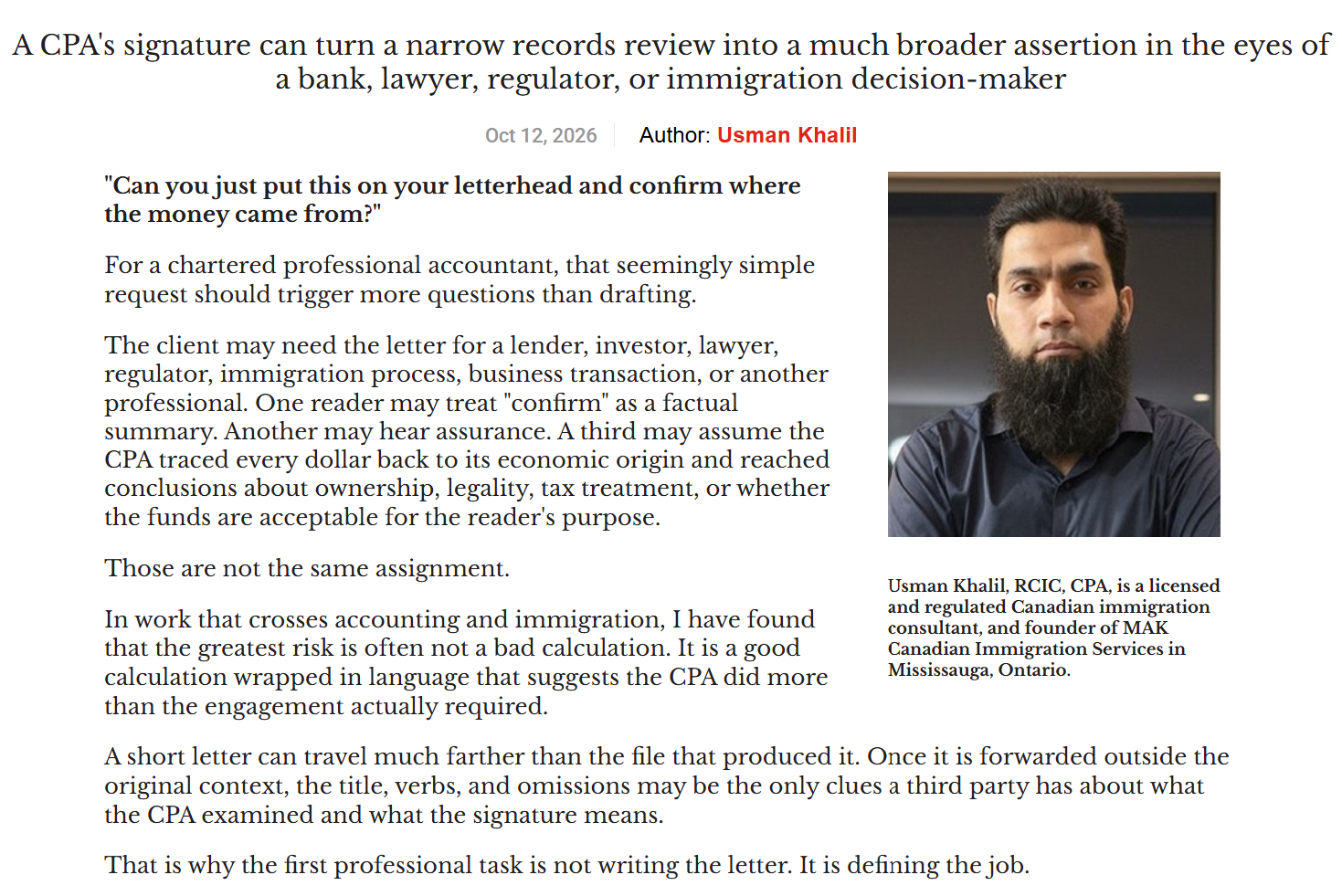
By Usman Khalil (RCIC R709592 and CPA Ontario C83028834), published October 12, 2026 in Canadian Accountant on the work behind a CPA's source-of-funds letter.

Abstract
A source-of-funds letter can appear to certify far more than the accounting work actually performed. Usman Khalil's Canadian Accountant article examines how CPAs should define the intended reader, the requested purpose, the source records and the actual procedures before agreeing to any letter. Reviewing records, reconciling transactions and performing an assurance engagement are not interchangeable professional services. The article distinguishes claims supported by third-party documents from statements supplied by a client and warns against broad verbs such as verified or certified when those conclusions were never established. It also addresses scope boundaries when accounting evidence is later used in a regulated Canadian immigration matter. The core question is what another professional could reproduce from the engagement file. This MAK abstract identifies the published work without reproducing its full contents.
Original publisher article: Canadian Accountant — When a client asks a CPA to "confirm source of funds": Define what the letter actually does. The full article, original photos and editorial content remain at the publisher.
Publication scope: This page is about professional communication and documentation, not a determination of whether any particular source of funds is acceptable. Its subject is distinct from the August 30 entrepreneur financial-story contribution.
Three themes in the contribution
01 / PURPOSE
Define the assignment before drafting
Identify who will rely on the letter, what specific question it should answer and the records the CPA can actually examine.
02 / PROCEDURES
Use only conclusions supported by the work
Describe documents reviewed, procedures performed and material limitations without implying blanket assurance, beneficial ownership or legal acceptability.
03 / PROFESSIONAL SCOPE
Keep professional scopes distinct
Accounting and paid immigration advice have different regulatory scopes; an informative financial letter is not an eligibility opinion.
