
A Canadian citizenship certificate is proof of citizenship; it is not a Canadian passport and does not by itself function as a travel document. Whether someone is already a Canadian citizen can depend on where and when they were born, their parent’s citizenship and the law that applies to the family history. The certificate application is used to obtain formal proof where citizenship already exists.
To get a certificate, you apply for proof of citizenship, online through an IRCC account if you qualify or on paper with form CIT 0001, and the government fee is $75 per person (IRCC fee list). IRCC’s processing-times tool shows about 34 months for a citizenship certificate (proof of citizenship), so check it again before you apply.
IRCC fee list updated November 10, 2026; processing time last updated October 9, 2026; checked by MAK on November 14, 2026.
When it comes to proving one’s Canadian citizenship, the Canadian citizenship certificate is the most significant document. The Canadian citizenship certificate is not a passport and will not allow you to board an aircraft; instead, it serves as the government’s official confirmation of your citizenship status.
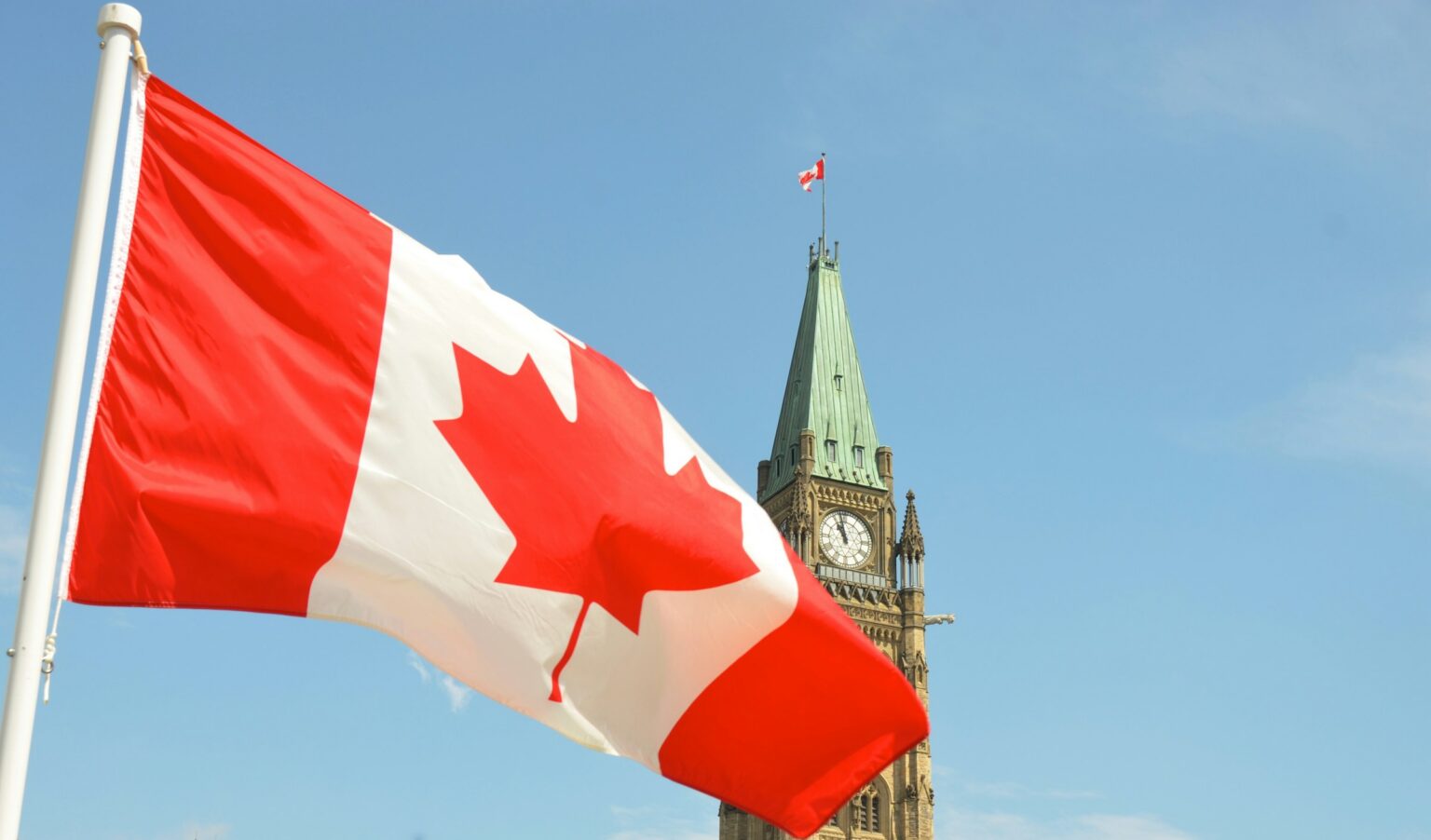
This certificate is frequently the initial stage in the process of gaining access to the full rights and services of Canadian citizens for individuals who were born abroad to a Canadian parent or who require a replacement for an old or lost proof.
Canadian citizenship certificate: quick facts
| Topic | What IRCC says (read November 14, 2026) |
|---|---|
| Government fee | $75 per person (IRCC fee list, page modified November 10, 2026) |
| Processing time | IRCC’s processing-times tool shows about 34 months for a citizenship certificate (proof of citizenship), last updated October 9, 2026. IRCC says to add 3 to 4 months for mailing if you live outside Canada and the U.S. and apply through a Canadian embassy, high commission or consulate, and 6 to 8 months for a minor who lives outside Canada and the U.S. if the application went directly to the Case Processing Centre in Sydney, Nova Scotia. |
| How to apply | Online through an IRCC account if you meet IRCC’s online conditions; otherwise on paper. Anyone born in Canada, and anyone updating a certificate (name, date of birth, country of birth or gender), applies on paper; for a lost, stolen or destroyed certificate, see Replace or fix below. |
| Paper forms | CIT 0001 (application), CIT 0014 (checklist), CIT 0555 (a Canadian parent’s physical presence, where needed), IRM 0002 (sex or gender identifier), in IRCC’s package. |
| What you receive | An e-certificate or a paper certificate, depending on what you asked for. An e-certificate link goes to your IRCC account (online applications) or to the email in your application (paper applications). A paper certificate is mailed to your address in Canada or the U.S., or to the embassy, high commission or consulate if you applied from outside Canada and the U.S. (IRCC). |
| Urgent processing | Possible for reasons IRCC lists, with an explanation and supporting documents; not guaranteed (IRCC help centre). |
| Replace or fix | Lost, stolen or destroyed: online if you meet the online conditions, otherwise on paper. New name, date of birth, country of birth or gender: paper. Same $75 fee (IRCC paper guide). A mistake IRCC made, 90 days or less after you received the certificate: replaced free (IRCC help centre). |
| E-certificate download | IRCC sends a letter with download instructions (by email for paper applications, usually to your IRCC secure account for online ones), and you download the PDF from the IRCC Portal (IRCC e-certificate page). |
Who is eligible to apply for a citizenship certificate?
If you were born outside of Canada, you may be a Canadian citizen without even realizing it. In general:
- You may be a Canadian citizen if at least one of your parents was a Canadian citizen (by birth or naturalization) before you were born. This is referred to as citizenship by descent.
- To have this recognized officially, you apply for a citizenship certificate, which serves as proof.
- If your Canadian parent was also born outside Canada, read our guide to second-generation Canadian citizenship born abroad before you file, because the rules turn on your date of birth.
For many years, citizenship by descent was limited to the first generation born abroad (the “first-generation limit,” or FGL): a child born outside Canada generally was not a citizen if their only Canadian parent was also born outside Canada and had citizenship by descent. This changed with Bill C-3 (see below), which came into force on December 15, 2025, so the rules now depend on when you were born or adopted.
Apart from proving citizenship by descent, Canadians may also apply for a new certificate if:
- Their original document was lost, stolen, or damaged;
- They changed their legal name; or
- They need an updated version of their proof.
Bill C-3 and the First-Generation Limit
The first-generation limit was frustrating for many families. It has now been changed by law.
Bill C-3 (An Act to amend the Citizenship Act, 2025) received Royal Assent on November 20, 2025 and came into force on December 15, 2025. It is now Statutes of Canada 2025, chapter 5 (LEGISinfo, parl.ca, read November 14, 2026). Before it came into force, interim measures announced on March 13, 2025 allowed some affected people to ask for a discretionary grant of citizenship.
How the rules apply now depends on the date of birth or adoption: (1) People born abroad before December 15, 2025 may have become citizens automatically if the former first-generation limit (or certain historic provisions) was the only reason they were not already citizens; people adopted abroad in the second generation or later before that date are, in IRCC’s words, “likely eligible” for a direct grant of citizenship instead (IRCC, rules since December 15, 2025). (2) For births or adoptions on or after December 15, 2025, a Canadian parent who was themselves born or adopted abroad generally must show a “substantial connection” to Canada — at least 1,095 cumulative days of physical presence in Canada before the child’s birth or adoption — to pass citizenship to the child.
Because eligibility now depends on your exact facts and dates, use IRCC’s Check if you may be a citizen page or check the official Government of Canada citizenship pages to confirm your situation. The 1,095-day test does not apply to everyone — it applies mainly to children born or adopted abroad on or after December 15, 2025 to a Canadian parent who was also born or adopted abroad.
Exceptions to the First-Generation Limit
Even under the former first-generation limit, it did not apply if a Canadian parent (or grandparent) held certain overseas Crown-service positions at the time of the child’s birth.
This exception covers service with the federal public administration or the Canadian Armed Forces, and children born in those circumstances could be eligible for citizenship certificates even if they were not the first generation born abroad. IRCC’s online-eligibility questions also count the public service of a Canadian province or territory: IRCC calls all three groups crown servants, but not locally engaged employees, meaning foreign citizens hired in their own countries to support Canadian offices abroad.
How do I apply for a Canadian citizenship certificate?
You apply online through an IRCC account if you meet IRCC’s online conditions, and on paper with form CIT 0001 and the CIT 0014 document checklist if you do not. The conditions depend on your dates and your reason for applying: for example, anyone born in Canada, and anyone updating a certificate (a new name, date of birth, country of birth or gender), must use paper.
IRCC says a citizen can apply, a parent can apply for a minor child born outside Canada, and anyone unsure whether they are a citizen can apply to find out. Where the online route is open, a biological parent or legal parent at birth can apply for up to 3 children at once if the reason is the same for each; legal guardians, and parents applying for 4 or more children, use paper.
Proving citizenship through a parent or grandparent? Start with our checklist of citizenship by descent documents. A certificate only proves citizenship you already have; a permanent resident applies for a grant instead (see our guide to applying for Canadian citizenship and the citizenship grant for a minor child who is a permanent resident).
How to Apply for a Citizenship Certificate
To determine whether you or your child may be eligible, you can use Immigration, Refugees and Citizenship Canada’s (IRCC) information page, Check if you may be a citizen, before submitting an application. The official application procedure always makes the final decision; this page only offers preliminary guidance.
Step 1: Get the Application Package
The package includes detailed instructions, a document checklist, and the main form (CIT 0001).
Step 2: Prepare Your Documents
Applicants usually need to provide:
- A completed and signed application form,
- Two valid pieces of government-issued ID (one with a photo),
- Two identical printed photos that meet IRCC’s citizenship photo specifications (online applicants upload a digital photo instead),
- Translations for any non-English or non-French documents, and
- Any additional documents depending on your personal situation.
If something doesn’t apply to you, write “Not applicable” on the form rather than leaving it blank.
Step 3: Pay the Fee
The cost is $75 per person (IRCC fee list, read November 14, 2026); check the fee again on the IRCC payment page before you pay. Although those who apply through embassies or consulates may have other options, payments are typically made online. Always include a copy of the payment receipt with your application.
Step 4: Submit Your Application
Applications can be submitted online or by mail. Once received, IRCC will issue you an Acknowledgment of Receipt (AOR), along with your Unique Client Identifier (UCI).
Processing Times
Processing times change over time, so check the current estimate on IRCC’s processing-times tool before you apply. If you’re applying from outside Canada or your case is complex, it may take longer. You can ask for urgent processing in some situations, such as when you need proof of citizenship for work, school, or benefits, but urgent requests are not always granted.
How do I replace or update a citizenship certificate?
To update a certificate (a new name, date of birth, country of birth or gender) you apply on paper, and to replace a lost, stolen or destroyed certificate you can apply online if you meet the online conditions, or on paper if you do not. The fee is the same $75 either way, and when you apply you must return any old paper certificate or card you still have, or delete every copy of an old e-certificate.
IRCC has stopped issuing citizenship cards, so an approved application to replace or update a card gets you a certificate instead; the sex or gender identifier change form, IRM 0002, is in the application package.
IRCC’s pages word replacements differently: the online instruction guide (updated September 23, 2026) says you can apply online to replace a lost, stolen or destroyed certificate, while the paper list on the How to apply page still names replacing a certificate as a reason to use paper. Answer the questions on that page before you choose: they send you to paper if you were born in Canada, if you are replacing your own certificate together with your children’s, or if you also need to change the name, date of birth, country of birth or gender on it.
IRCC allows only one valid citizenship certificate, so the originals you send back include old naturalization certificates and any pink transmission copies, and a replaced e-certificate must not be downloaded again until IRCC decides. If you find an old certificate after the new one arrives, IRCC says to send it to the Case Processing Centre in Sydney, Nova Scotia.
How do I change the name on my citizenship certificate?
You apply on paper for an updated certificate and include a copy of the legal document that shows both your previous and new names, such as a change of name document, a court order or an adoption order. A marriage certificate, divorce decree or civil union record is accepted for a change to your family name only.
If you changed your name outside Canada, the IRCC paper guide (Appendix C) asks for your amended foreign passport or other national document, a document linking the old and new names (such as a translated foreign marriage certificate), and ID in the new name: a provincial or territorial document if you live in Canada, or a government photo ID from where you live if you live abroad. If you are reclaiming an Indigenous name and cannot get an amended birth certificate or a legal change of name document, IRCC asks for a Statutory Declaration (IRM 0005) and proof that you could not get them. Once processing has begun, IRCC says a name change can only be made because of an administrative error by the Department or a legal change of name.
What if there is a mistake on my citizenship certificate?
If IRCC made the mistake (you gave correct information but the certificate is wrong, such as a misspelled name or wrong date of birth) and you received the certificate 90 days ago or less, IRCC replaces it for free. If the mistake was not IRCC’s, or it has been more than 90 days, you apply on paper to replace the certificate and pay the fee.
How you report a free correction depends on whether you have a paper certificate or an e-certificate and what you applied for, and IRCC’s help centre sets out the email, web form and mailing routes. To fix a mistake on an old citizenship card, IRCC says you apply for a citizenship certificate and pay the fee.
How do I download my citizenship e-certificate?
If IRCC approves your application and you chose an e-certificate, it sends you a letter with download instructions, and you download the certificate as a PDF from the IRCC Portal. For a paper proof-of-citizenship application the letter goes to the last email address you gave IRCC; for an online application it usually goes to your IRCC secure account.
The letter has the invite code you use to create your IRCC Portal account, and you must use the last email address you gave IRCC; IRCC’s e-certificate page explains what to do if the letter is missing or the code does not work. The IRCC Portal is a separate account from the one you applied in, and if a representative applied for you, IRCC emails the letter to them; to download the certificate yourself, request a new invitation code with your own email in the IRCC Portal instead of using the code in that letter. You can download the e-certificate as many times as you want, but IRCC says you must print it (both pages) to apply for a new adult passport, and not to apply for a replacement just because you are having trouble downloading it.
Can I get a citizenship certificate urgently?
Sometimes: IRCC may process a certificate faster for reasons it lists, such as a job, school, a pension, health care or a social insurance number, or travel because of a death or serious illness in the family when you cannot get a passport in your other nationality. You must explain why (in a letter, or in the online application itself) and send supporting documents, and IRCC says that even if your request qualifies, it can’t guarantee you will get your certificate on time.
How you ask depends on whether and how you already applied, and IRCC warns not to submit a duplicate urgent application. Our guide to requesting an urgent citizenship certificate covers the reasons, the evidence and what to do if your deadline is close.
IRCC also lists an urgent route for dual Canadian citizens: to qualify, you must also be a citizen of a visa-exempt country and have proof of air travel to Canada within 6 months after the date you apply.
Who Doesn’t Need a Citizenship Certificate?
Not everyone needs one:
Most people born in Canada are citizens by birth (with narrow exceptions, such as children of certain foreign diplomats), and a Canadian birth certificate is generally enough. Naturalized citizens get a citizenship certificate in the format they chose: a paper certificate at an in-person ceremony, a paper certificate by mail after a virtual ceremony, or an e-certificate in the IRCC Portal (IRCC, after the ceremony).
The Canadian citizenship certificate is a crucial document for individuals who need to verify their status, particularly those born outside Canada to a Canadian parent. Since Bill C-3 came into force on December 15, 2025, the former first-generation limit no longer applies in the same way, and more families with a substantial connection to Canada may now be able to confirm or pass on citizenship. Because the rules depend on your specific dates and facts, confirm your eligibility with IRCC before applying.
If you believe you may be eligible, it is a good idea to confirm your status and, where appropriate, begin the application process. This is the most reliable way to obtain official documentation of your citizenship in Canada.
Many people ask for proof of citizenship because they want to sponsor a family member: a Canadian citizen can sponsor a spouse or partner, and the certificate is how you show the citizenship. If that is your reason, see our spousal sponsorship page. Last reviewed: November 14, 2026.

